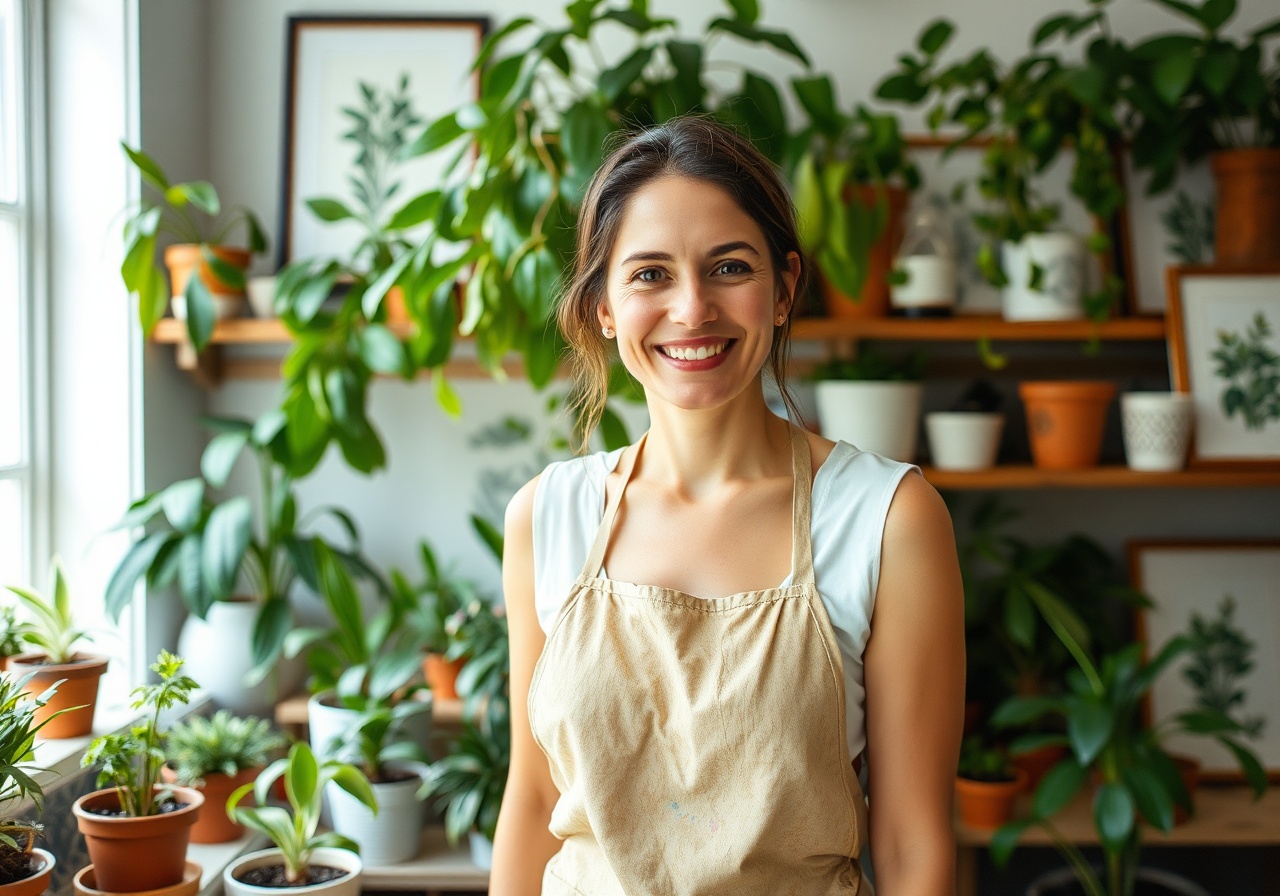
1. What sparked your interest in botanical illustration?
It started as a way to remember the plants I was growing. I realized that if I didn't draw them, I forgot the details of their veins or the curve of a leaf. Over time, the act of drawing became a meditation. I stopped trying to make it 'perfect' and started focusing on the experience of looking.
2. How do you define 'calm' in the context of an art class?
I define calm as the absence of self-judgment. In a noisy world, we are often taught to be critical of our output. I create a space where a messy line is just as valuable as a straight one. When the internal critic quiets down, the work speaks for itself.
3. What is the most common misconception beginners have about drawing?
That you need to have a special talent. I always tell my students that drawing is a skill, like swimming or playing an instrument. It is a muscle you build through repetition and patience. You don't need to be born with it; you need to be willing to practice.
4. How does your teaching philosophy translate to Snaply's platform?
On Snaply, the absence of time pressure is our greatest asset. I can design a lesson that takes 20 minutes to watch, but allows a student to sit with the concepts for hours. It respects the learner's pace, which is essential for true absorption.
5. You mentioned 'noise' earlier. How do you help students filter out distractions?
We start every module with a breathing exercise. It sounds simple, but pausing to reset the nervous system before picking up a pen changes everything. It's a physical cue to the brain: 'Now is the time to be present.'
6. Can you describe a 'breakthrough' moment for one of your students?
I had a student who was terrified of watercolor. She thought she was terrible at it. After weeks of gentle exercises, she sent me a photo of a single leaf she had painted. She said she finally felt like she was 'looking' at the world for the first time. That is the reward.
7. What tools do you recommend for someone starting out?
Simplicity is key. I recommend a solid watercolor pad, a few round brushes in different sizes, and a black micron pen. You don't need a full studio. You just need something to capture the light.
8. What’s next on your creative horizon?
I'm working on a seasonal series for Snaply focused on garden mapping. I want to help people document their own outdoor spaces, no matter how small, and find joy in the micro-details of their environment.